The Business of Tennis Grand Slams
Where the $1.9bn of Grand Slam money really comes from
Share
Tennis looks pretty simple from the outside.
A court, two or four players, a ball and a racket.
Behind the scenes, however, tennis is a huge global business, generating billions of pounds through broadcasting, ticket sales, sponsorship, hospitality, merchandise and licensing.
The global tennis market is estimated to be worth around $4.5bn, while the four Grand Slams alone generate c$1.9bn in revenue every year.
And that is before you consider the wider economic impact of these events, from tourism and hotels to restaurants, transport and the thousands of people employed to put them on.
At the centre of this ecosystem are four very different tournaments, each with its own identity, audience and commercial strategy.
So, who are the big four?
Let's get into it.
Meet the big four
First up is the Australian Open, played at Melbourne Park every January.
It is the first Grand Slam of the year and has developed a reputation as the "Happy Slam", with its relaxed atmosphere, large crowds and focus on entertainment. It has also become one of the biggest sporting events in Australia, attracting more than one million visitors across the tournament and surrounding events.
Then comes the French Open, or Roland-Garros.
Played on the famous red clay of Paris, it is the only Grand Slam contested on clay and has a completely different identity to the other three. It is slower, more tactical and deeply connected to French culture, fashion and the city of Paris itself.
Next comes Wimbledon.
Grass courts, white clothing, strawberries and cream and the Royal Box make Wimbledon instantly recognisable around the world. It is arguably the most prestigious tennis tournament and certainly one of the strongest sporting brands anywhere.
Finally, there is the US Open.
Played in New York, it is louder, faster and more entertainment-focused than the other Slams. The tournament has embraced night sessions, music, restaurants, celebrity appearances and a distinctly New York atmosphere.
Four tournaments.
Four very different businesses.
Where does the money actually come from?
There are four main revenue streams for the Grand Slams: broadcasting, ticket sales, sponsorship and hospitality.
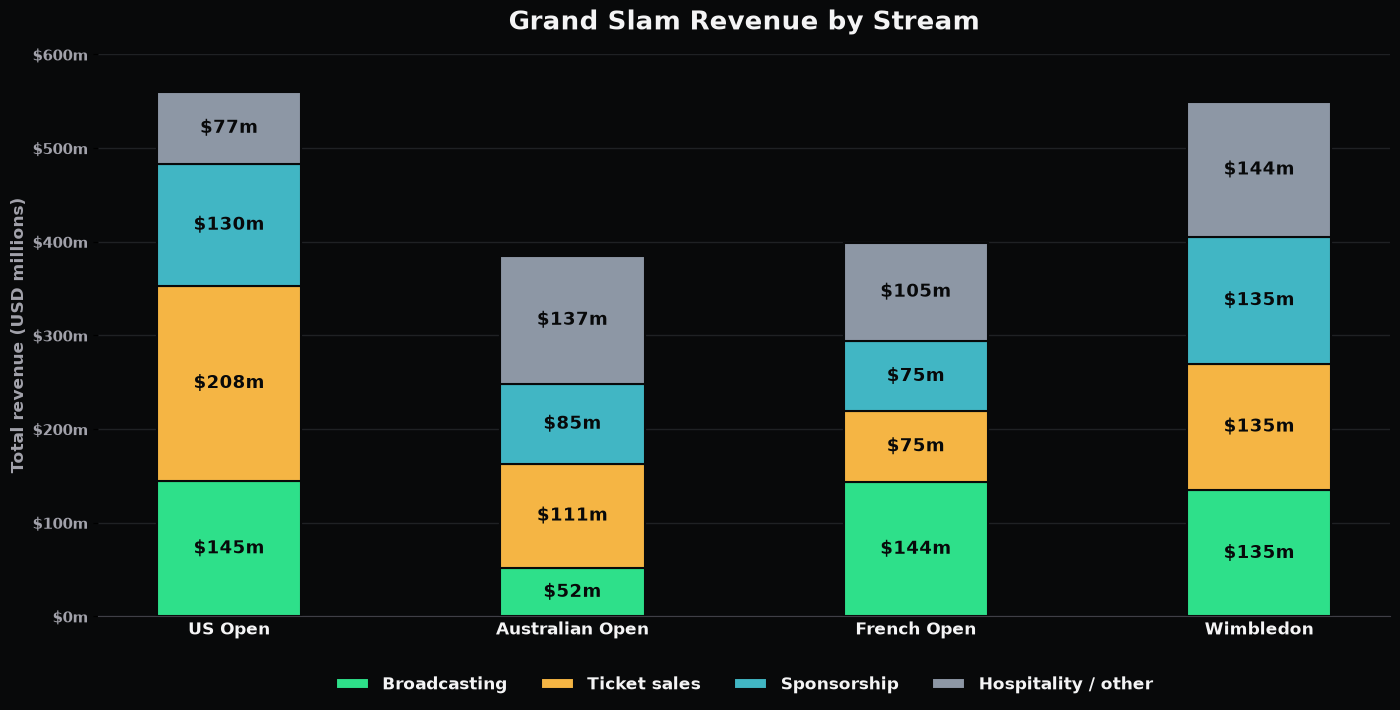
Sources: Grand Slam revenue figures and category estimates are based on publicly available financial reports from the relevant tennis organisations, alongside reporting and analysis from the Financial Times, Reuters, GlobalData and other industry sources; figures have been converted into US dollars using approximate exchange rates.
Broadcasting is arguably the most important
The tournaments sell the rights to show their matches around the world, with broadcasters paying significant sums because live sport attracts large audiences that advertisers are willing to pay to reach.
Tennis is particularly valuable because there is almost always something happening. Matches take place throughout the day and evening, across different courts and time zones, creating a huge amount of live content.
Then there are ticket sales
This is the most obvious source of revenue, but it has become increasingly sophisticated. The Slams can sell everything from basic grounds passes to premium seats, finals tickets and highly exclusive corporate packages.
Which brings us to hospitality
This is where the economics become particularly interesting.
A corporate customer might pay thousands of pounds for a premium Wimbledon or US Open experience, which can include food, drinks, entertainment and some of the best seats in the stadium.
For many businesses, the tennis is only part of the attraction. The opportunity to entertain clients and build relationships can be just as valuable.
Finally, there is sponsorship.
The Grand Slams are some of the most recognisable sporting properties in the world, giving brands access to millions of fans, television viewers and affluent consumers.
A sponsor isn't simply buying a logo around a tennis court.
They are buying access to the audience that comes with the tournament.
Wimbledon: the Rolls-Royce of tennis
Wimbledon has something the other Grand Slams cannot simply buy.
Heritage.
The tournament takes place at one of the most iconic sporting venues in the world, for just two weeks every summer, with demand for tickets and hospitality consistently exceeding supply.
That creates enormous pricing power.
But Wimbledon is also structurally different from the other Grand Slams because it is operated by the All England Lawn Tennis Club, rather than directly by a national tennis federation.
The tournament generated around £450m of revenue in 2026, demonstrating just how powerful the Wimbledon brand has become.
The price of Wimbledon debentures has also soared, highlighting the extraordinary demand for premium access to the tournament and the growing value investors place on the Wimbledon experience.
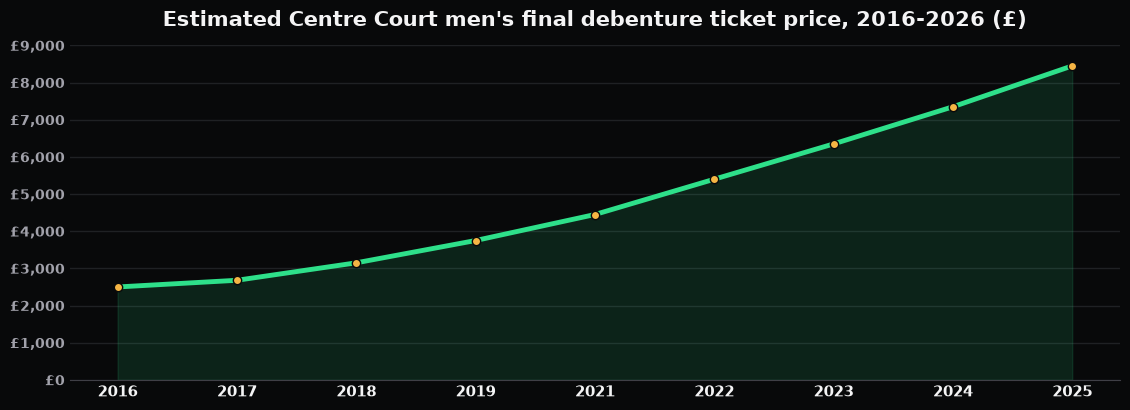
Sources: Wimbledon/AELTC official ticket and debenture information; The Guardian, The Times, Financial Times and specialist Wimbledon debenture marketplaces. Historical figures are estimated secondary-market prices and should be treated as indicative rather than official transaction prices; 2026 pricing is based on current debenture listings.
Perhaps most importantly, Wimbledon doesn't need to constantly reinvent itself.
Its history does much of the marketing for it.
You don't need to explain what Wimbledon is.
That is a very valuable position for a business to occupy.
Where does all the money go?
Running a Grand Slam is incredibly expensive.
The biggest cost is putting on the tournament itself, including player prize money, staff, officials, security, technology, court preparation and the huge logistical operation required to host hundreds of thousands of fans.
Then there is the infrastructure.
Stadiums need upgrading, courts need maintaining and technology needs to be constantly improved as the expectations of players and fans continue to rise.
The US Open has invested heavily in creating a wider entertainment experience around the tennis, with restaurants, bars, shops and sponsor activations making the tournament feel increasingly like a two-week sporting festival.
The Australian Open has taken a similar approach, investing in Melbourne Park and expanding the wider fan experience.
There is also an important social purpose behind the money.
The Grand Slams are closely connected to their respective tennis organisations, meaning commercial success can ultimately help fund grassroots tennis, player development and the wider sport.
So when you buy a ticket to a Grand Slam, you are not simply paying to watch a few hours of tennis.
You are helping fund a much larger sporting ecosystem.
So, what is tennis actually selling?
Broadcasters buy access to millions of viewers. Sponsors buy access to those viewers and fans. Hospitality customers buy the opportunity to entertain clients. Fans buy the experience of being inside one of the biggest sporting events in the world.
The tennis is the product that brings everyone through the door.
And that creates an interesting investment question.
If you could buy shares in one Grand Slam as a business, which one would you choose?
Wimbledon for the brand?
The US Open for the commercial upside?
The Australian Open for its growth potential?
Or Roland-Garros for the magic of Paris?
Maybe the best investment isn't always the one with the biggest numbers.
Sometimes, it is the one people simply can't stop talking about.
Share this episode
Comments
Sign in to read and join the conversation.
Sign in to comment